Showroom
Welcome to our Tracker Off Road showroom page!

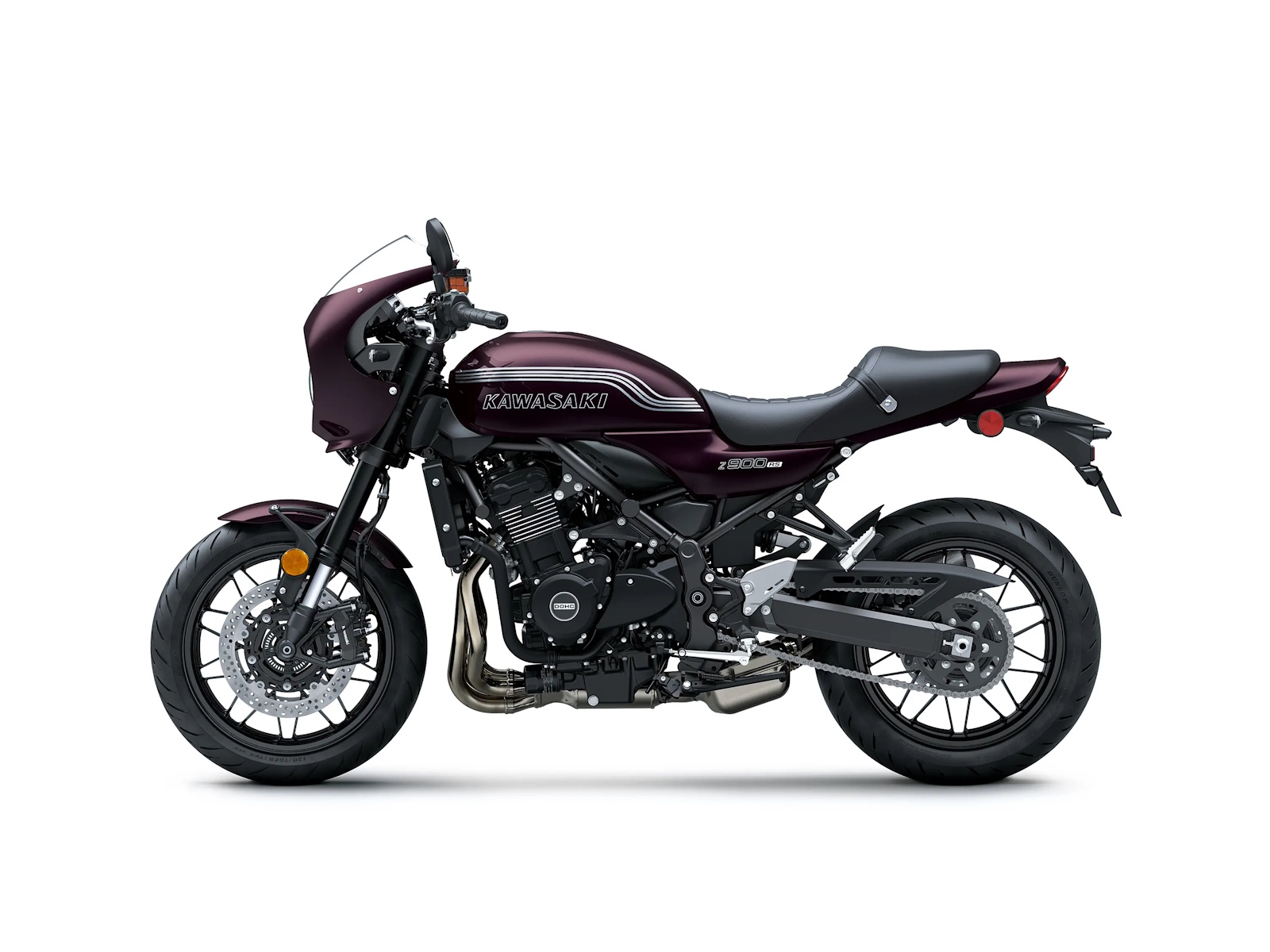
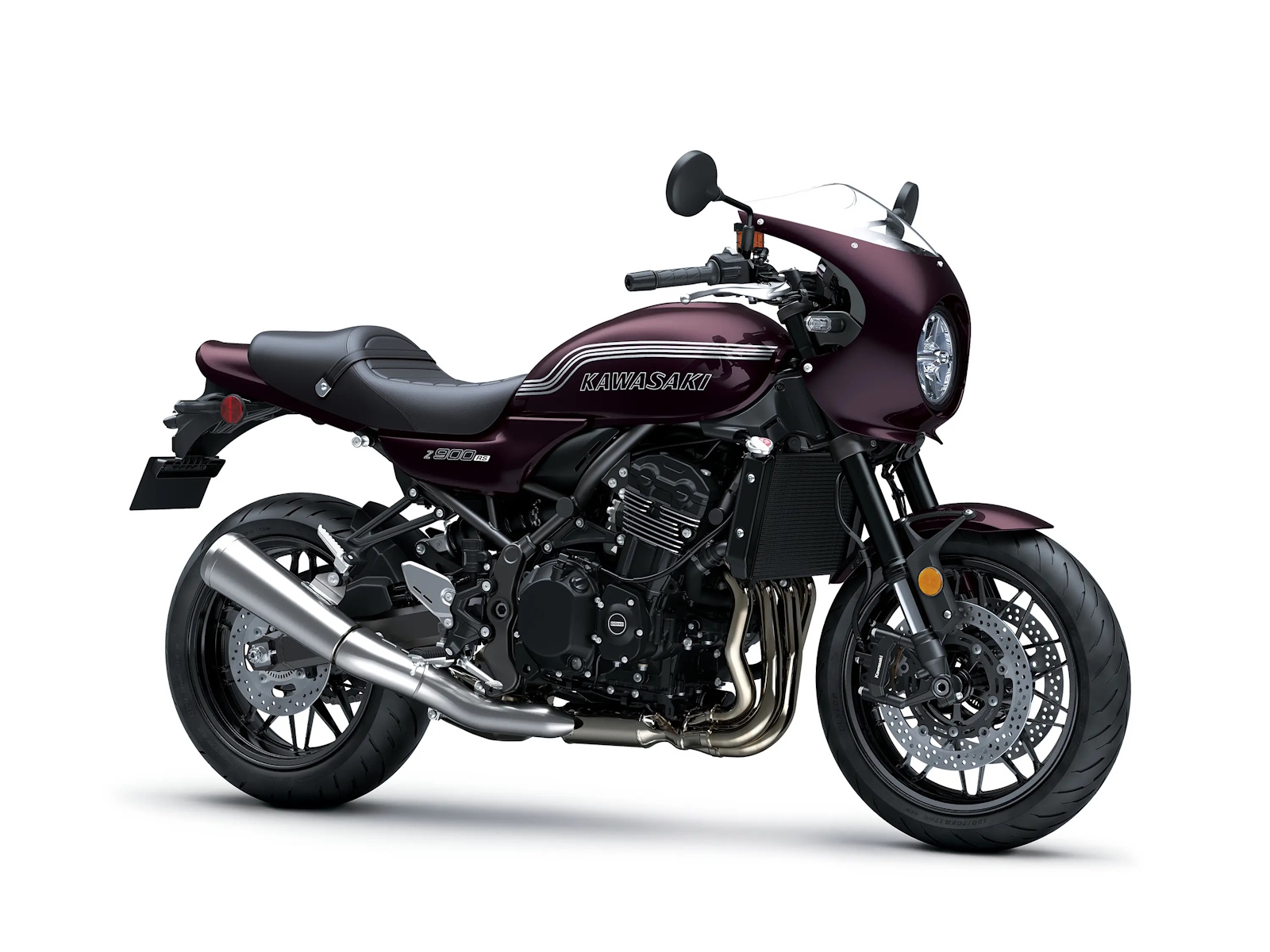
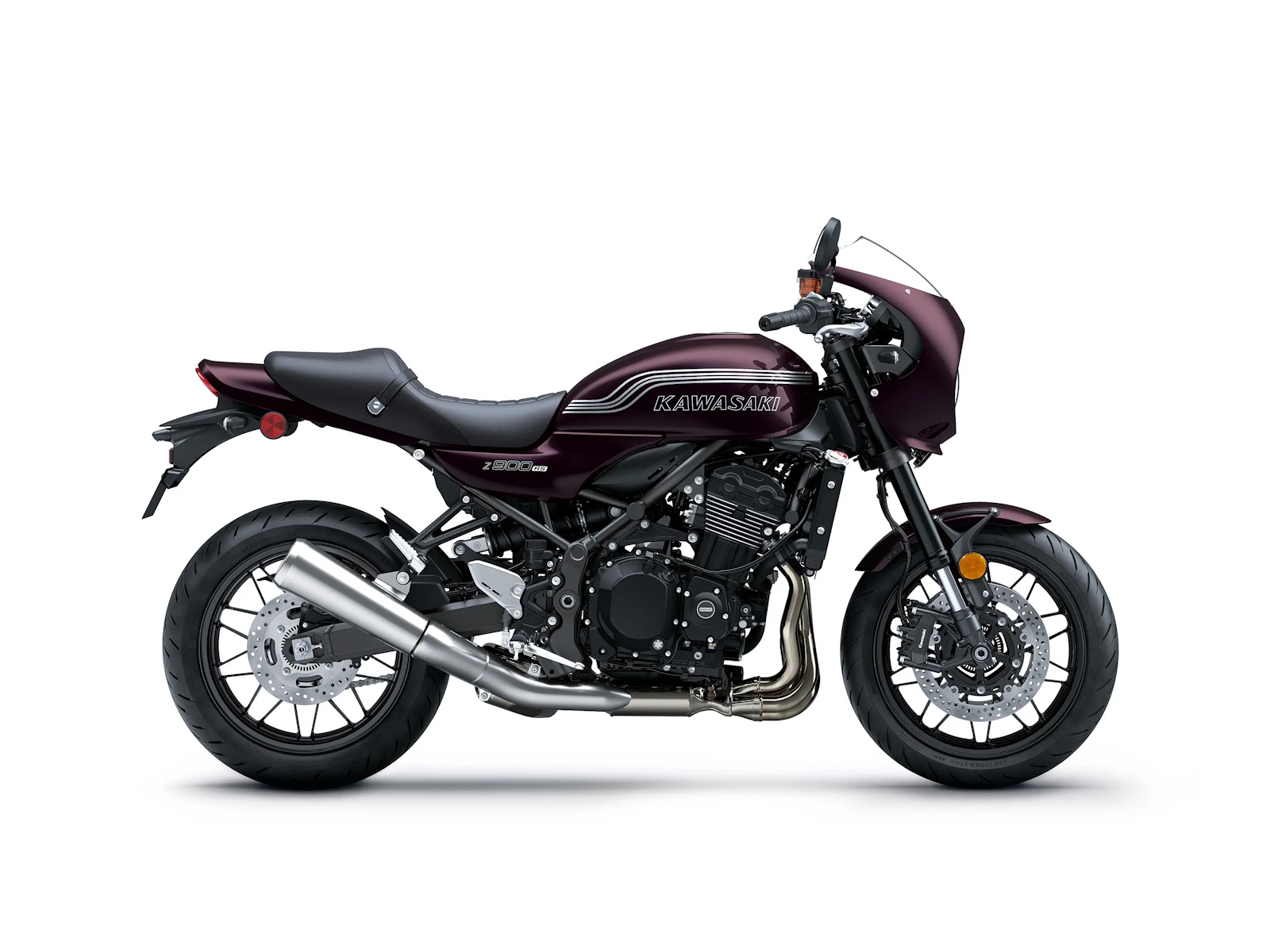
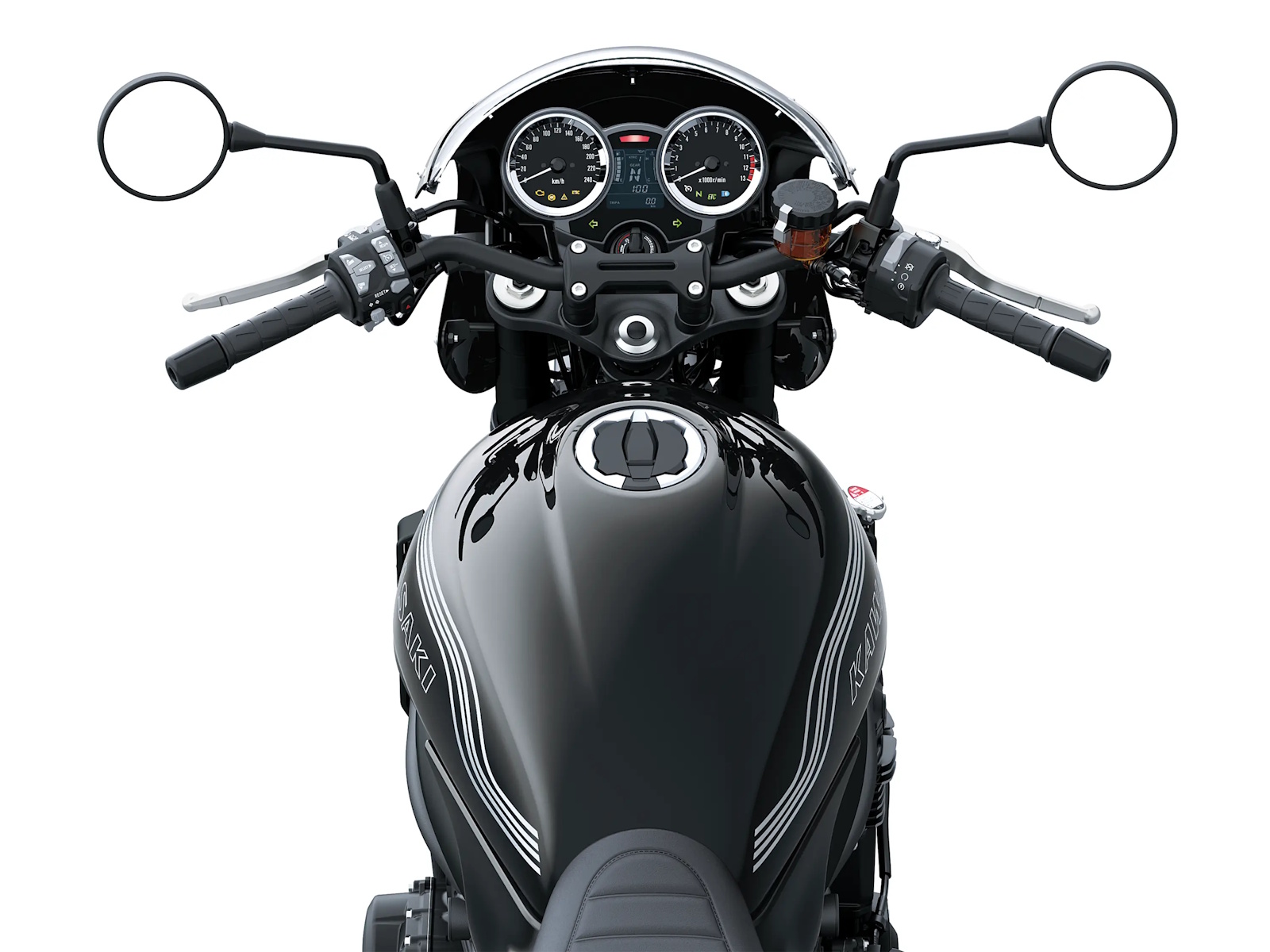
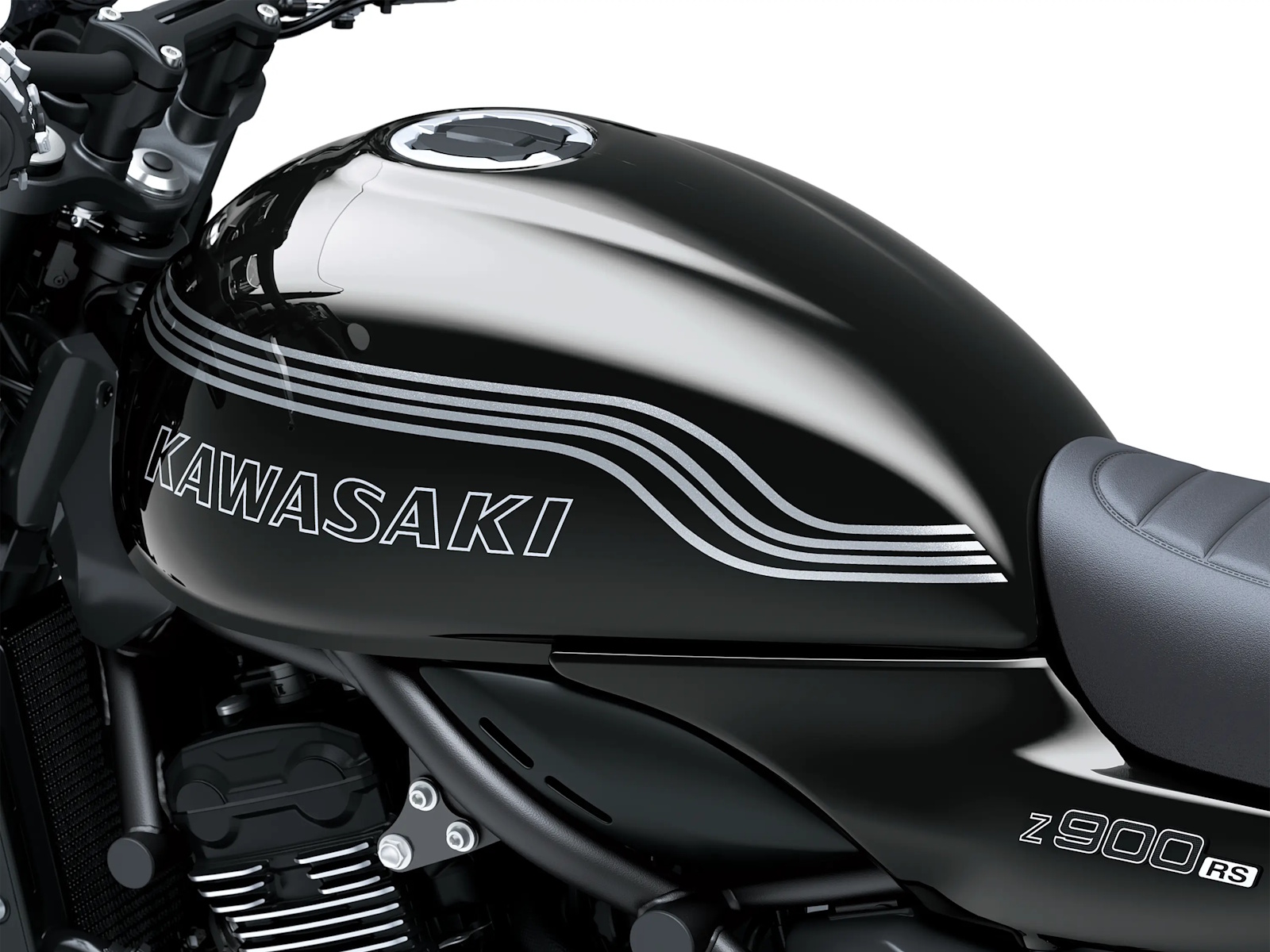
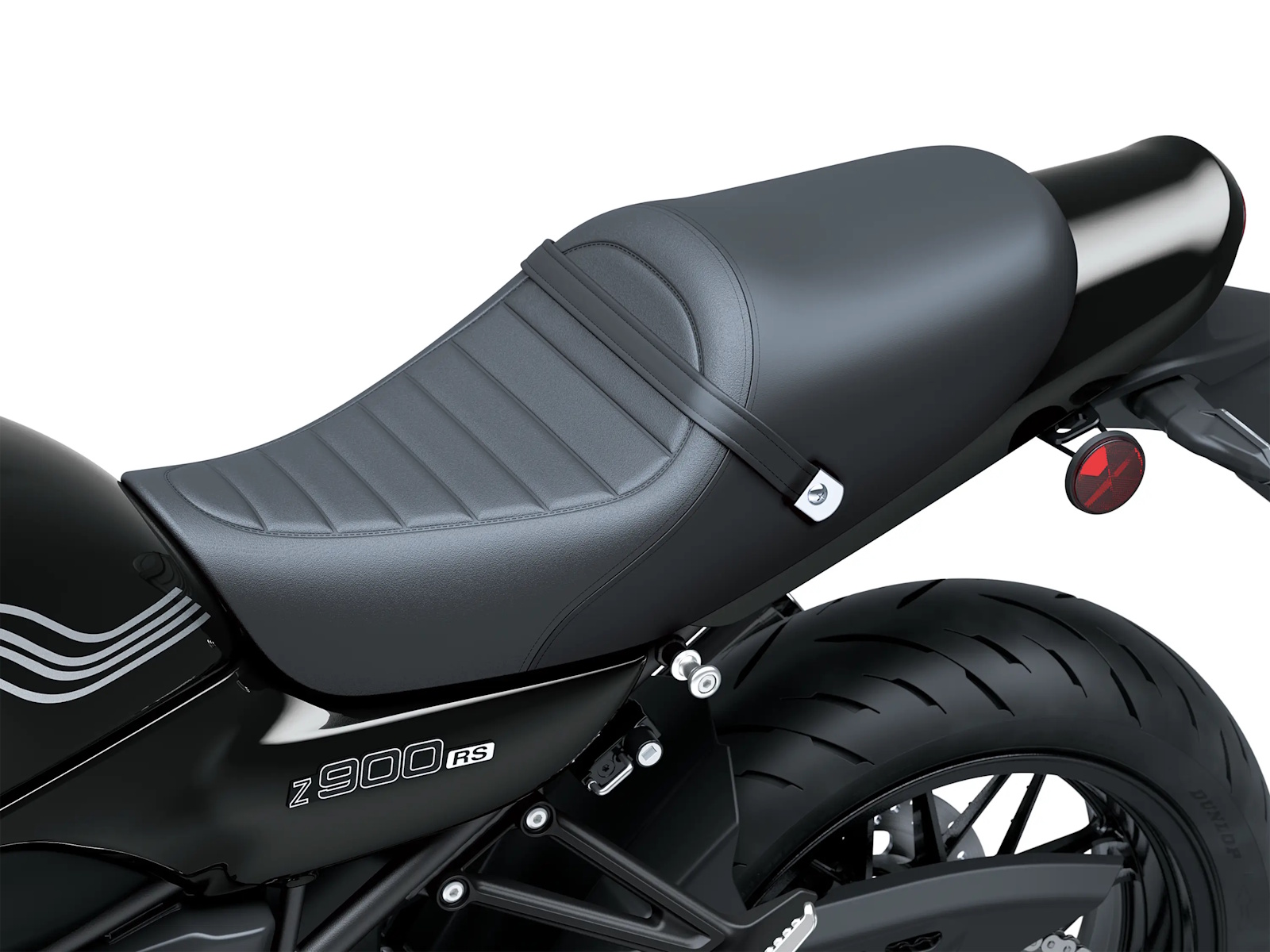
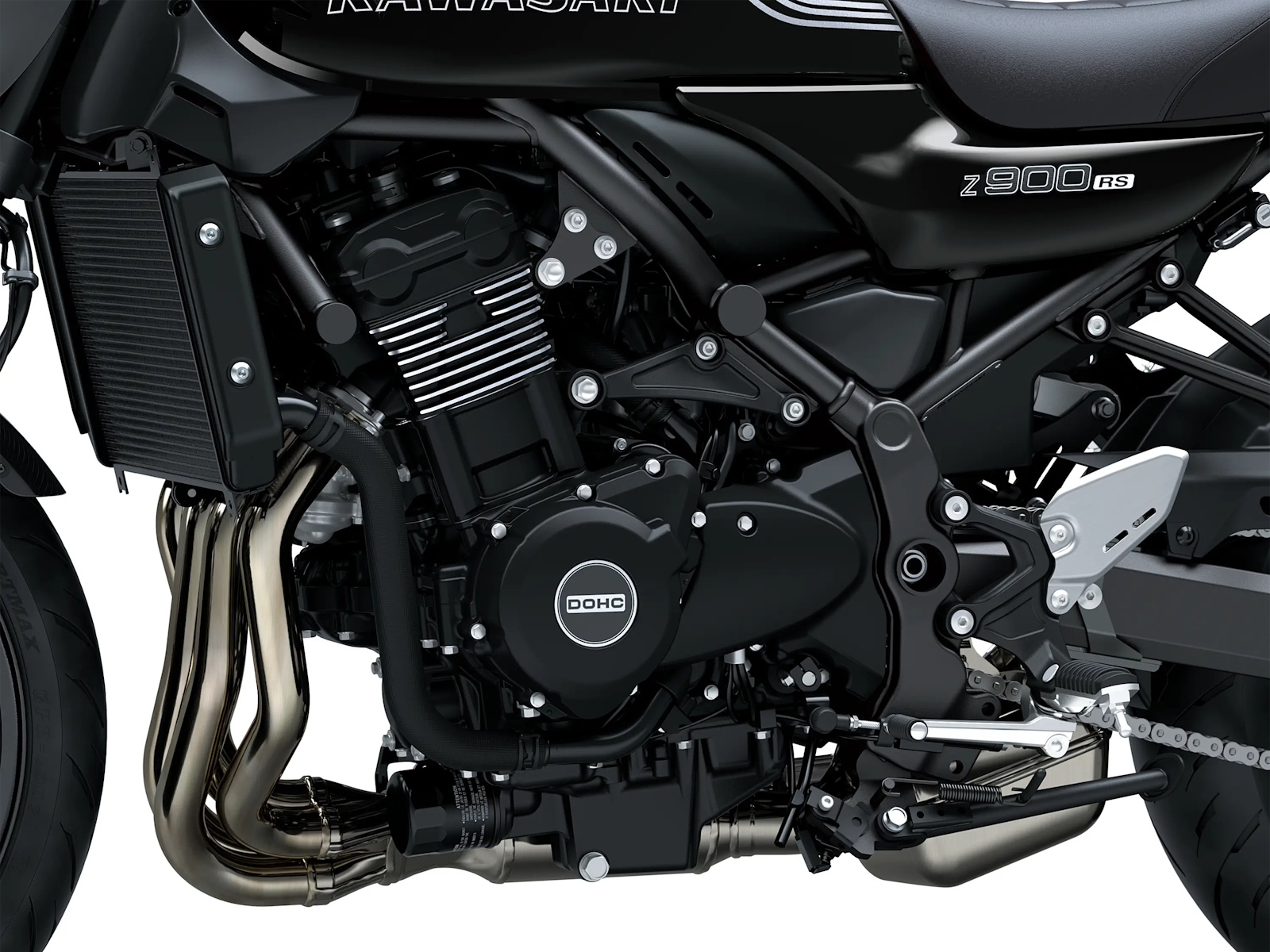
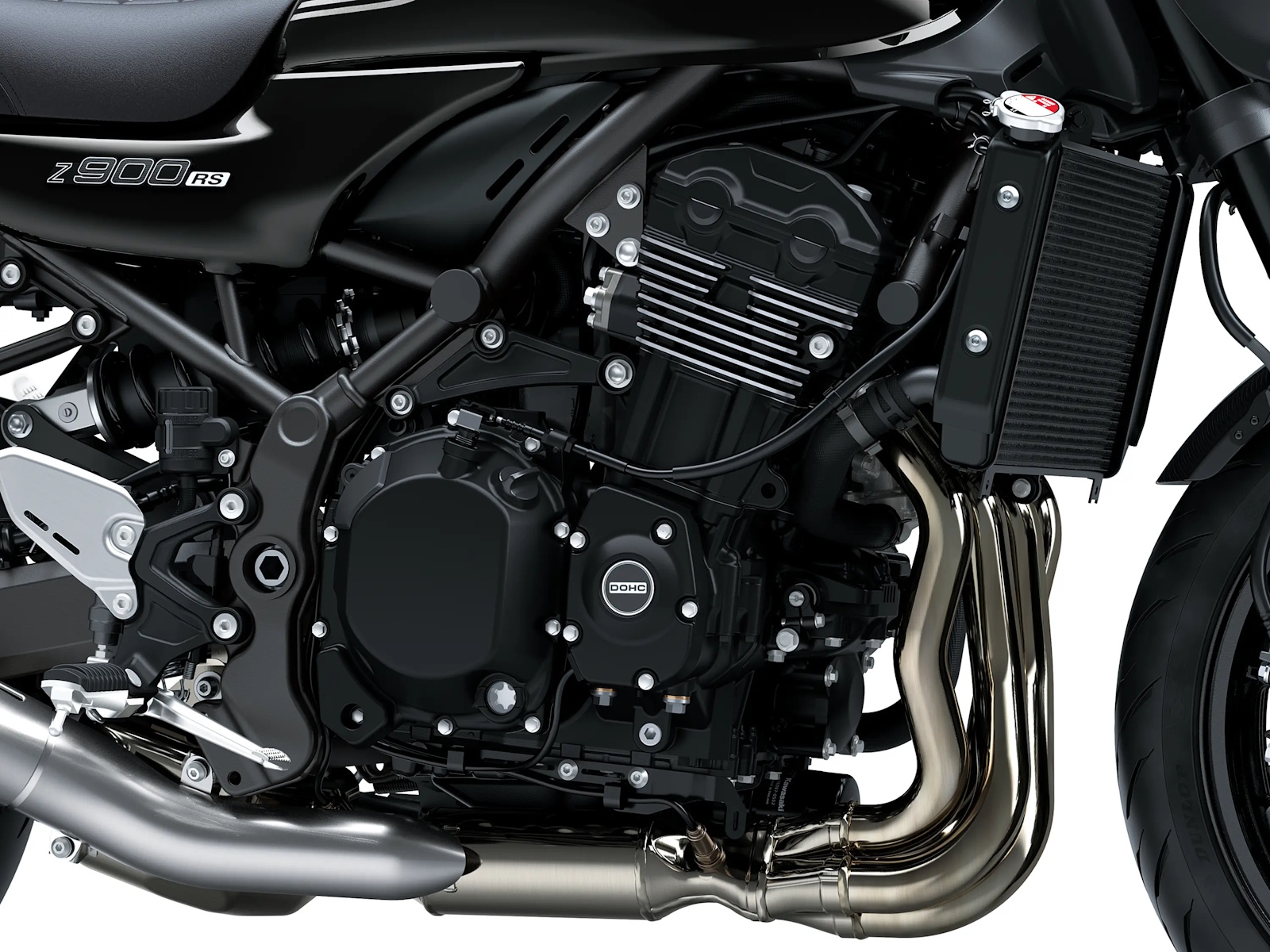
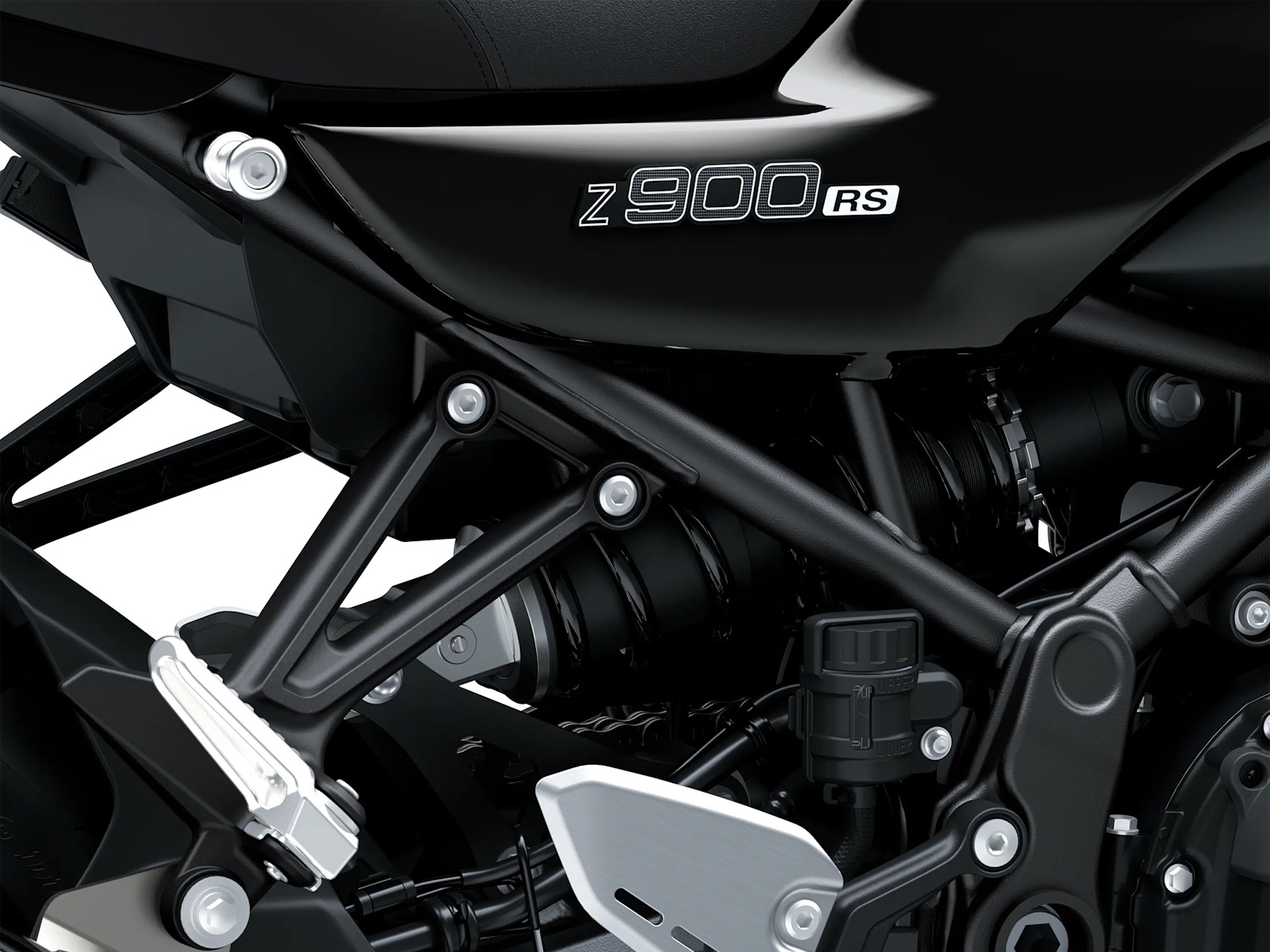
2027 Kawasaki Z900RS CAFE ABS Candy Tone Red





Get in Touch
Description
2027 Kawasaki Z900RS CAFE ABS Candy Tone Red
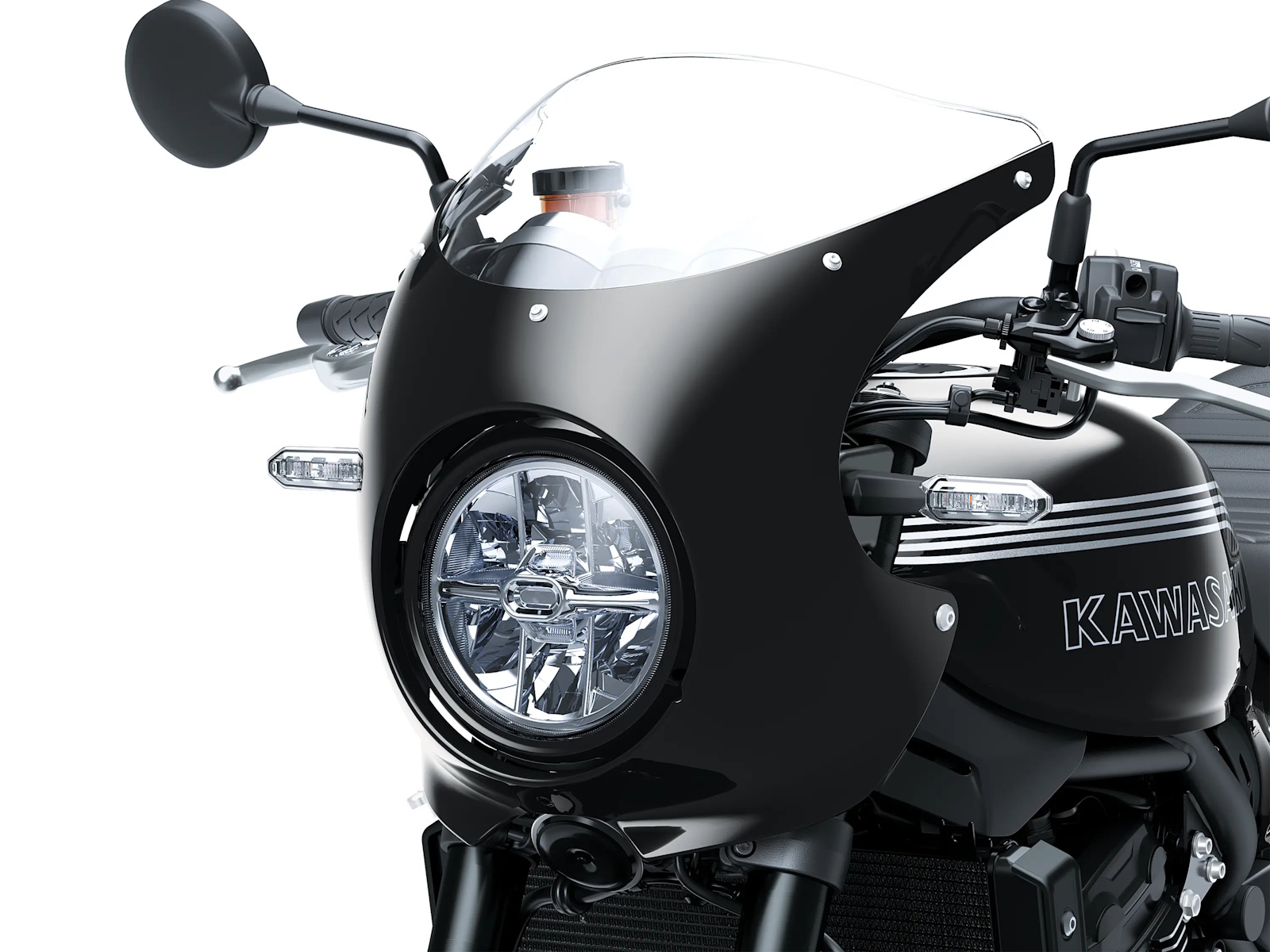
RETRO-SPORT MOTORCYCLE WITH MODERN TECH AND CAFE EDITION FEATURES
Technology
Engine Management Technology
Assist & Slipper Clutch
Based on feedback from racing activities, the Assist & Slipper Clutch uses two types of cams (an assist cam and a slipper cam) to either drive the clutch hub and operating plate together or apart.
Under normal operation, the assist cam functions as a self-servo mechanism, pulling the clutch hub and operating plate together to compress the clutch plates. This allows the total clutch spring load to be reduced, resulting in a lighter clutch lever feel when operating the clutch.
When excessive engine braking occurs - as a result of quick downshifts (or an accidental downshift) - the slipper cam comes into play, forcing the clutch hub and operating plate apart. This relieves pressure on the clutch plates to reduce back-torque and helps prevent the rear tire from hopping and skidding. This race-style function is particularly useful when sport or track riding.
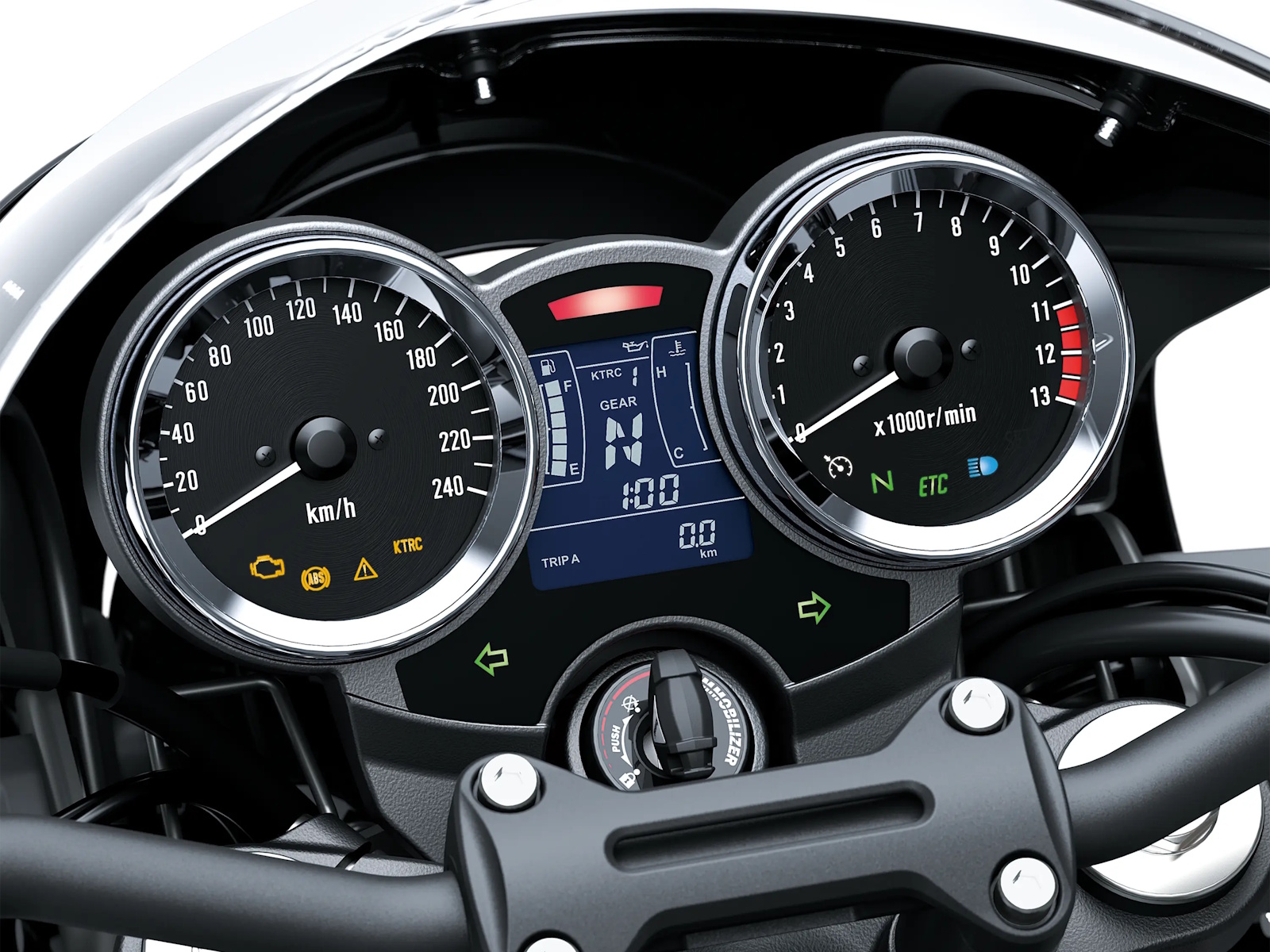
Economical Riding Indicator
Using high-precision electronic control for engine management, Kawasaki models can achieve a high level of fuel efficiency. However, fuel consumption is greatly affected by throttle use, gear selection, and other elements under the rider's control. The Economical Riding Indicator is a function that indicates when current riding conditions are consuming a low amount of fuel. The system continuously monitors fuel consumption, regardless of vehicle speed, engine speed, throttle position and other riding conditions. When fuel consumption is low for a given speed (i.e. fuel efficiency is high), an "ECO" mark appears on the instrument panel. By riding so that the "ECO" mark remains on, fuel consumption can be reduced.
Electronic Cruise Control
Electronic Cruise Control allows a desired speed (engine rpm) to be maintained with the simple press of a button. Once activated, the rider does not have to constantly apply the throttle. This reduces stress on the right hand when traveling long distances, enabling relaxed cruising and contributing to a high level of riding comfort.
Electronic Throttle Valves
Kawasaki's fully electronic throttle actuation system enables the ECU to control the volume of both the fuel (via fuel injectors) and the air (via throttle valves) delivered to the engine. Ideal fuel injection and throttle valve position results in smooth, natural engine response and the ideal engine output. The system also makes a significant contribution to reduced emissions.
Electronic throttle valves also enable more precise control of electronic engine management systems like S-KTRC and KTRC, and allow the implementation of electronic systems like KLCM, Kawasaki Engine Brake Control, dual-direction KQS, and Electronic Cruise Control.
KCMF (Kawasaki Cornering Management Function)
Using the latest evolution of Kawasaki's advanced modeling software and feedback from a compact IMU (Inertial Measurement Unit) that gives an even clearer real-time picture of chassis orientation, KCMF monitors engine and chassis parameters throughout the corner - from entry, through the apex, to corner exit - modulating brake force and engine power to facilitate smooth transition from acceleration to braking and back again, and to assist riders in tracing their intended Line through the corner. The systems that KCMF oversees vary by model, but may include:
- S-KTRC/KTRC (including traction management and wheel lift management)
- KLCM (including traction management and wheel lift management) - Designed to optimize acceleration from a stop
- KIBS (including pitching management and corner braking management)
- Kawasaki Engine Brake Control
KTRC (Kawasaki Traction Control)
KTRC, Kawasaki's advanced traction control system provides both enhanced sport riding performance and the confidence to negotiate low-traction surfaces. Multiple rider-selectable modes (the number of modes varies by model) offer progressively greater levels of intrusion to suit the riding situation and rider preference.
Less intrusive modes maintain optimum traction during cornering. Designed with sport riding in mind, they facilitate acceleration out of corners by maximising forward drive from the rear wheel. And because Kawasaki's sophisticated software bases its dynamic analysis on the chassis' orientation relative to the track surface (rather than relative to a horizontal plane), it is able to take into account corner camber, gradient, etc, and adapt accordingly.
In the more intrusive modes (and for some models, in any mode), when excessive wheel spin is detected, engine output is reduced to allow grip to be regained, effectively enabling riders to negotiate both short, challenging patches (train tracks or manhole covers) and extended stretches of low-traction conditions (wet pavement, cobblestone, gravel) with confidence.
Some models equipped with IMU incorporate chassis-orientation feedback to offer even more precise management.
For off-road models, KTRC facilitates acceleration out of corners by mitigating excessive rear wheel spin in low-traction conditions. Multiple modes allow riders to set the level of traction control to suit preference or course conditions.
KQS (Kawasaki Quick Shifter)
Designed to help riders maximize their acceleration on the track by enabling clutchless upshifts with the throttle fully open, KQS detects that the shift lever has been actuated and sends a signal to the ECU to cut ignition so that the next gear can be engaged without having to use the clutch. On models that offer clutchless downshifts, during deceleration the system automatically controls engine speed so that the next lower gear can be selected without operating the clutch.
Rideology the App Motorcycle
Clever technology enables riders to connect to their motorcycle wirelessly. Using the smartphone application "RIDEOLOGY THE APP MOTORCYCLE," a number of instrument functions can be accessed, contributing to an enhanced motorcycling experience. Vehicle information (such as the odometer, fuel gauge, maintenance schedule, etc.) can be viewed on the smartphone. Riding logs (varies by model, but may include GPS route, gear position, rpm, and other information) can be viewed on the smartphone. When connected, telephone (call, mail) notices are displayed on the instrument panel. Riders can also make changes to their motorcycle's instrument display settings (preferred units, clock and date setting, etc.) via the smartphone. And on
certain models, it is even possible to check and adjust vehicle settings (such as Rider Mode, electronic rider support features, and payload settings) using the smartphone. Smartphone connectivity with voice command is available.
Smartphone Connectivity
Originally offered on Kawasaki's on-road motorcycles, clever technology enables riders to connect to their motorcycle wirelessly. Using the smartphone application "RIDEOLOGY THE APP MOTORCYCLE," a number of instrument functions can be accessed, contributing to an enhanced motorcycling experience. Vehicle information (such as the odometer, fuel gauge, maintenance schedule, etc) can be viewed on the smartphone. Riding logs (varies by model, but may include GPS route, gear position, rpm, and other information) can be viewed on the smartphone and shared with other app users. When connected, telephone (call, mail) notices are displayed on the instrument panel. Riders can also make changes to their motorcycle's instrument display settings (preferred units, clock and date setting, etc) via the smartphone. On select models, features like Navigation and Voice Command are also supported. And on certain models, it is even possible to check and adjust vehicle settings (such as Rider Mode, electronic rider support features, and payload settings) using the smartphone.
On KX competition motorcycles with smartphone connectivity, riders can use the application "RIDEOLOGY THE APP KX" to adjust their bike's engine maps. Real-time Engine Monitoring, and Maintenance and Setup Logs are also available. For KX models equipped with GPS, "RIDEOLOGY THE APP KX2" offers additional functions like Trip Logs that riders can use to create track maps and analyse their performance. Traction Control Selection and Launch Control Selection allow riders to set and fine-tune these functions from the smartphone.
For side x sides, all-terrain vehicles and personal watercraft, "RIDEOLOGY THE APP POWERSPORTS" contributes to an enhanced off-roading or on-water experience. In addition to Trip Log recording and sharing, and vehicle management and maintenance support functions similar to those offered for on-road motorcycles, functions unique to off-road four-wheelers and personal watercraft are also available. Group Ride enables group members to view each other's locations on an in-app map on the smartphone. Geofence functionality alerts app users of no entry and other zones. For select personal watercraft, RIDEOLOGY THE APP POWERSPORTS can also share person-overboard information with nearby app users.
Feature availability and functionality vary by model and application. For more information, please refer to the Kawasaki Connect web site.
Sound Tuning
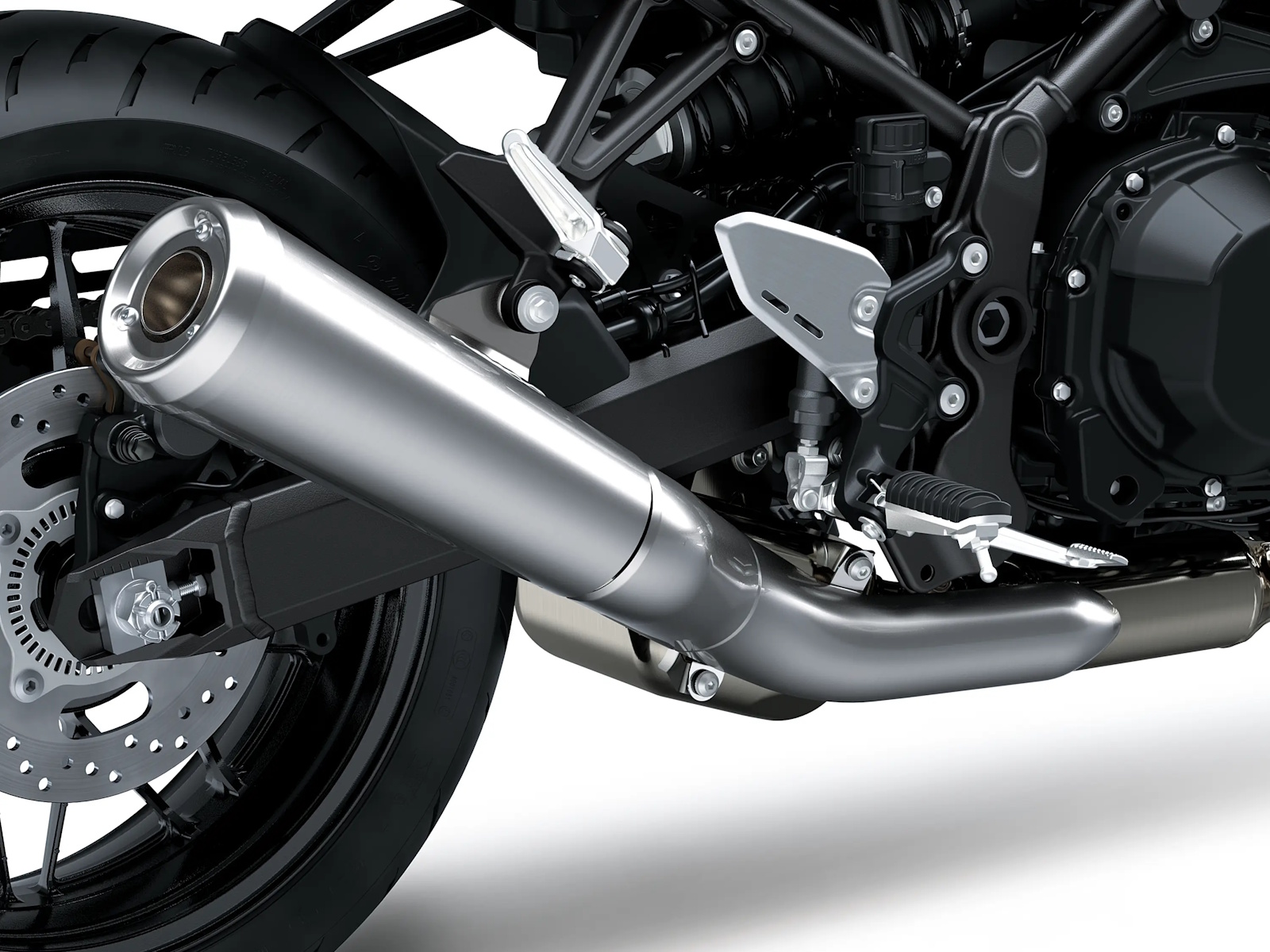
Kawasaki has long had a reputation for building great-sounding bikes - a characteristic inherent in the Kawasaki engine architecture - but it is only recently that effort has been put into crafting a specific auditory experience through careful sound tuning of either the intake or exhaust system.
Designed specifically to allow riders to enjoy their motorcycles aurally as well as physically, the carefully crafted auditory notes can be the key components of the street riding exhilaration offered by models that have benefitted from sound tuning. Sound tuning can include conducting sound research, designing intake and exhaust system components based on an acoustic test carried out in a sound room, and careful consideration of every detail of a system's components to ensure a balance of performance and the desired sound.
Info
Industry
Powersports
Make
Kawasaki
Model
Z900RS CAFE ABS
Trim
Candy Tone Red
Year
2027
MSRP
N/A
Category
Motorcycle
Subcategory
Naked
Specs
Engine Type
4-stroke, 4-cylinder, DOHC, 16-valve, liquid-cooled
Engine Cooling
Liquid-cooled
Engine Disp to Wgt
948cc
Bore x Stroke
73.4 x 56.0 mm
Compression Ratio
11.8:1
Horsepower
Maximum: 115.0 hp @ 9,300 rpm
Torque
Maximum: 73.0 lbs-ft @ 7,700 rpm
Fuel Type
Gas
Fuel System
DFI® with 36mm throttle bodies
Ignition/Starter
TCBI with Electronic Advance
Transmission
6-speed, return shift
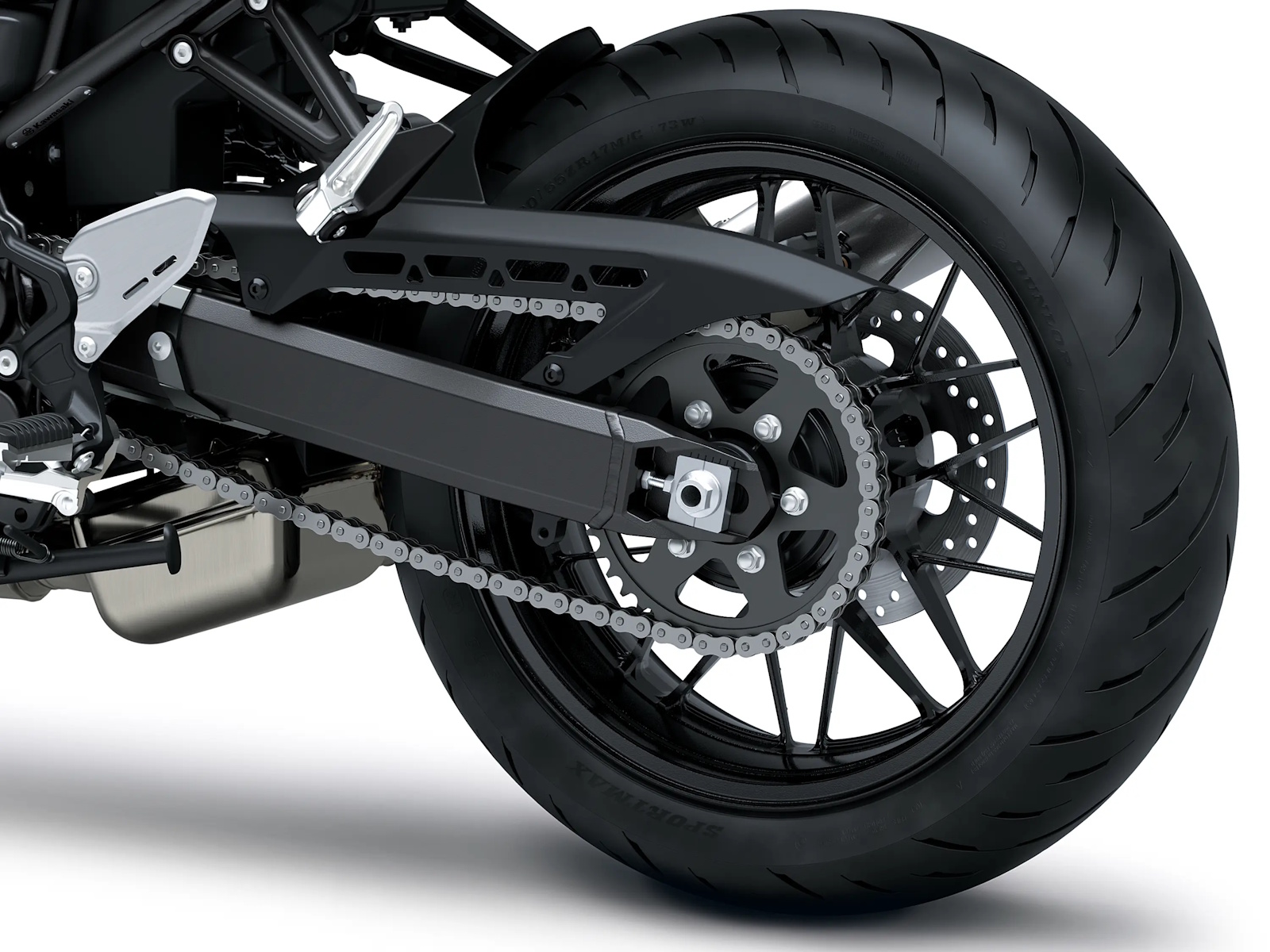
Drive Train
Final Drive: Sealed chain
Suspension (Front)
41 mm inverted telescopic fork with (12-way) adjustable compression and rebound (10-way) damping, spring preload (15-turn)
Suspension (Rear)
Horizontal back-link swingarm with stepless adjustable rebound damping and spring preload
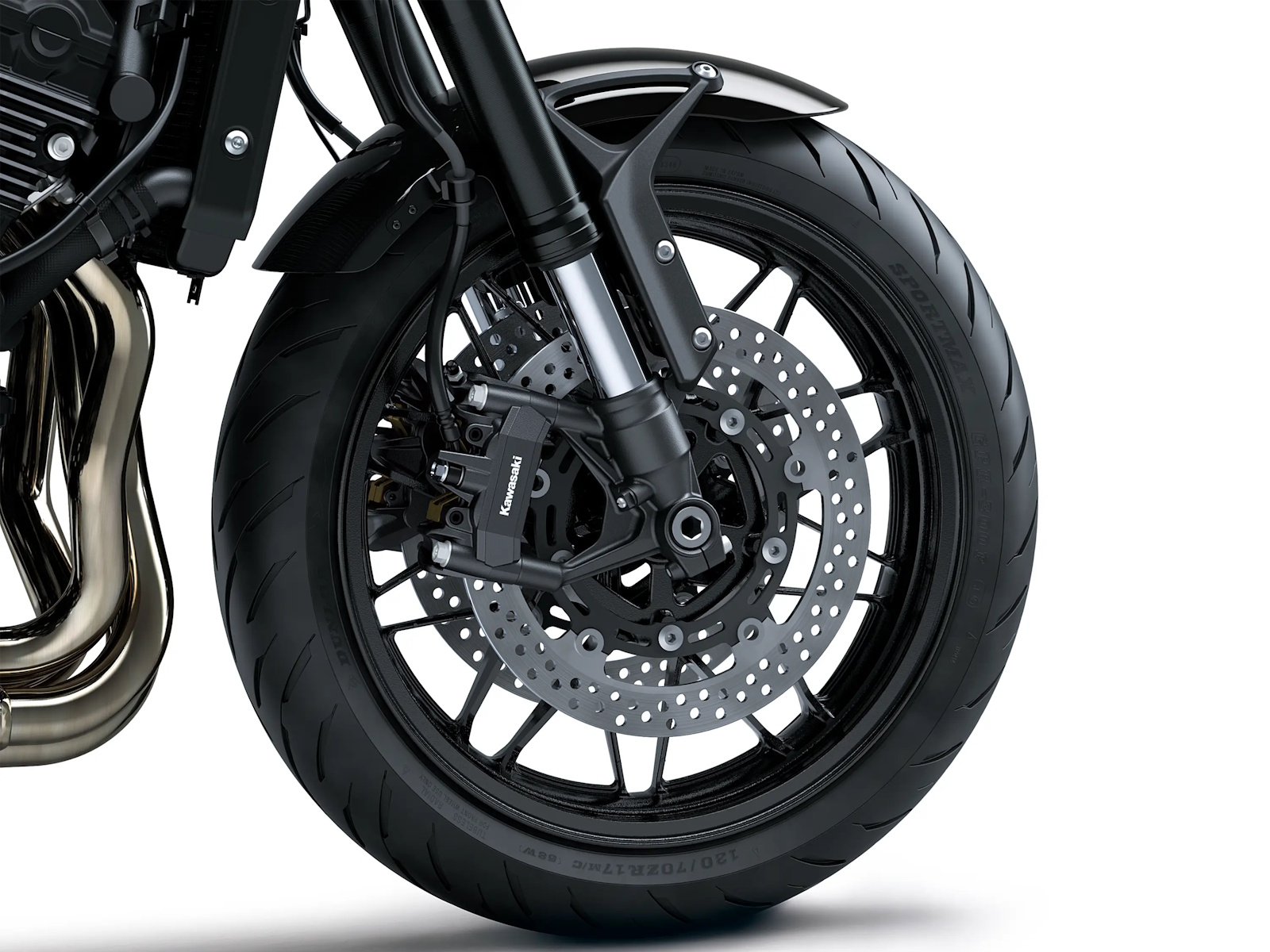
Front Tire
120/70-17
Rear Tire
180/55-17
Front Brake
Dual 300 mm discs with 4-piston calipers and ABS
Rear Brake
Single 250 mm disc with single-piston caliper and ABS
Frame
Type: Trellis, high tensile steel
Rake
25.0°
Trail
3.9 in
Length
Overall: 82.7 in
Width
Overall: 33.3 in
Height
Overall: 46.9 in
Ground Clearance
5.3 in
Seat Height
32.3 in
Weight (Dry)
Estimated: 438.8 lbs
Weight (Wet)
480.7 lbs
Fuel Capacity
4.5 gal
Wheelbase
57.7 in
Instrumentation
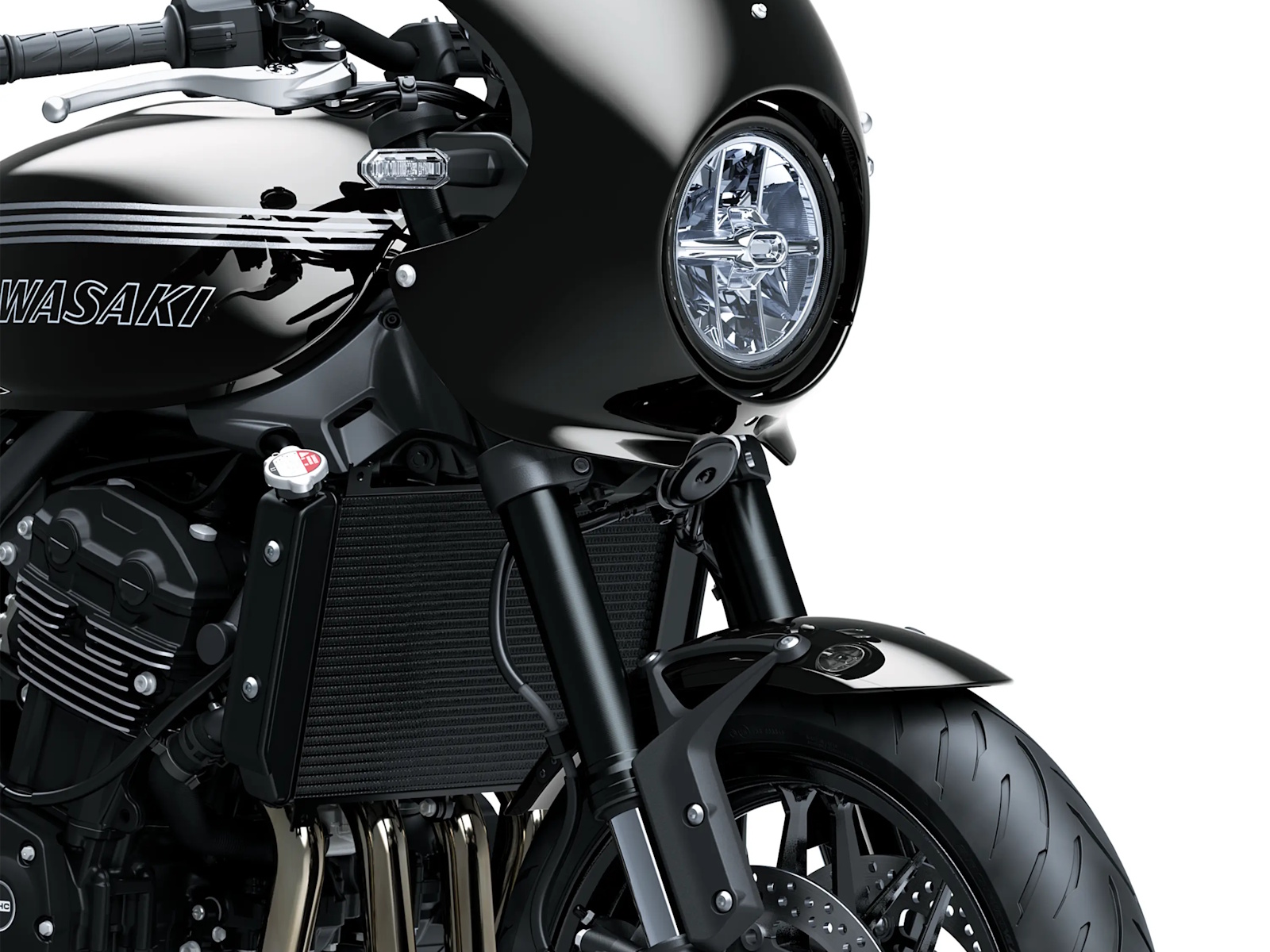
All-LED lighting, ERGO-FIT®, Smartphone Connectivity with available Voice Command and Turn-by-Turn Navigation via RIDEOLOGY THE APP MOTORCYCLE